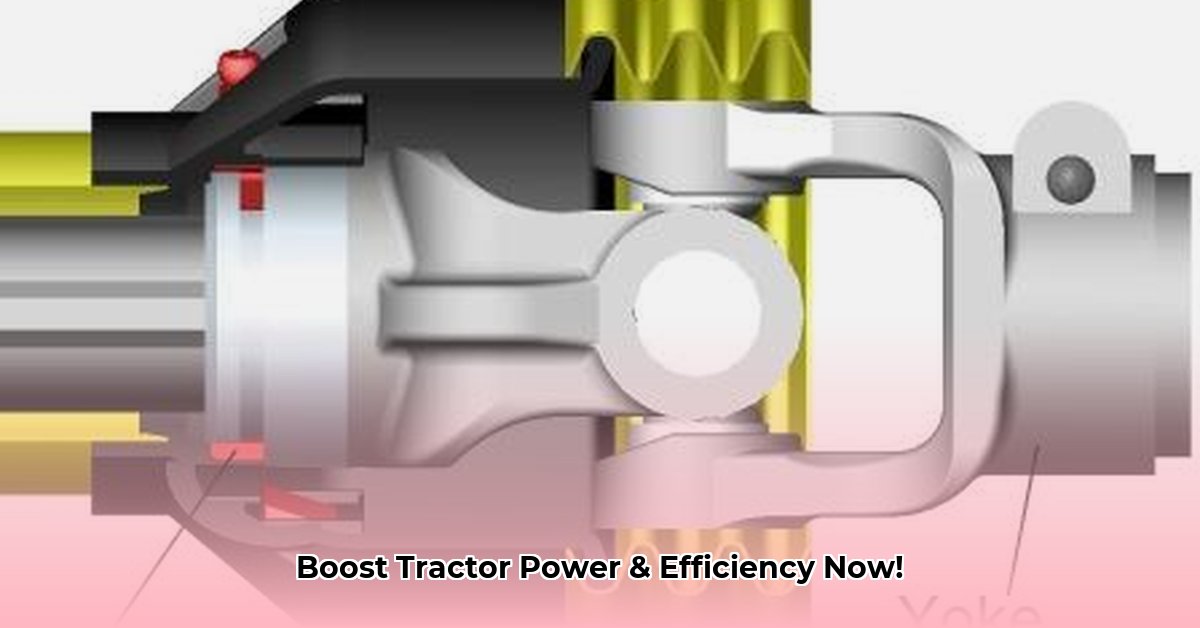
Keeping your tractor's power take-off (PTO) shaft protected is crucial for safety and efficiency. A damaged PTO shaft translates to costly repairs and significant downtime. This guide provides a comprehensive walkthrough of selecting and installing a PTO cover, ensuring your tractor remains productive and safe. For more PTO shaft information, see this helpful resource.
Understanding Your PTO Shaft: Ensuring a Proper Fit
Before selecting a PTO cover, accurately determine your PTO shaft's dimensions. Consult your tractor's manual for the correct size and specifications. Improper sizing leads to slippage, potential damage, and safety hazards. Think of it like choosing the right size wrench – an incorrect fit is ineffective and potentially dangerous. Measure the shaft's diameter and length precisely to avoid costly mistakes.
Types of PTO Covers: Choosing the Right Protection
Several PTO cover types cater to various needs and budgets:
Fabric/Nylon Covers: Lightweight and affordable, these offer basic protection but are less durable for heavy-duty applications. They are suitable for lighter tasks, but their lifespan might be shorter.
Rubber/Neoprene Covers: These provide a good balance between durability, protection, and cost. They offer better protection than fabric covers but may be slightly more challenging to install.
Metal Covers: Highly durable and offering superior protection, these are ideal for demanding tasks but come with a higher price tag and increased weight. They are a worthwhile investment for prolonged use in harsh conditions.
The optimal choice depends on your budget, the frequency of use, and the intensity of the work performed. For instance, a farmer consistently using heavy-duty implements should prioritize a robust metal cover over a less durable fabric option.
Selecting the Right PTO Cover: A Step-By-Step Guide
Choosing the correct PTO cover involves careful consideration and precise measurement. Follow these steps:
Precise Measurement: Use a tape measure to determine the exact diameter and length of your PTO shaft. Double-check these measurements to ensure accuracy. Inaccurate measurements can result in an ill-fitting cover.
Material Selection: Assess the required durability based on your typical workload. Heavy-duty applications demand more robust materials like metal or high-grade rubber/neoprene. Lighter tasks might tolerate fabric or thinner rubber covers.
Fastening System Evaluation: Verify a secure fastening system. A poorly secured cover is a significant safety risk. Choose a cover with a reliable and robust fastening mechanism—clamps, bolts, or straps.
Compatibility Confirmation: Always confirm compatibility with your tractor model and PTO shaft specifications. Check the manufacturer's specifications for a guaranteed fit. Some tractor models may have unique PTO shaft designs, requiring specific cover types.
Prioritize Safety: A poorly fitted cover is dangerous. A secure fit prevents entanglement and protects you from moving PTO components. Never compromise on safety.
Installing Your PTO Cover: A Practical Guide
Installing a PTO cover is usually straightforward, but always refer to the manufacturer's instructions for specific details—safety is paramount.
Thorough Cleaning: Clean the PTO shaft meticulously, removing any dirt, grease, or debris for a secure fit. A clean surface ensures optimal contact between the shaft and the cover.
Careful Alignment: Carefully slide the cover onto the PTO shaft, ensuring proper alignment to prevent misalignment and potential damage.
Secure Fastening: Tighten the fasteners according to the manufacturer's instructions. Inspect for any gaps or loose parts. Over-tightening can damage the cover or shaft.
Functional Test: Before operation, rotate the PTO shaft to ensure it spins freely and the cover remains securely attached. This checks for any interference or binding.
Regular Inspections: Regularly inspect the cover for wear and tear. Replace or repair any damage promptly. Early detection of problems prevents more serious issues.
Troubleshooting: Addressing Common Issues
If the PTO shaft seems restricted or the cover is loose, re-examine the installation. A poorly fitted cover can cause damage to both the cover and the PTO shaft, and it is a serious safety concern.
Loose Cover: Check and tighten the fastening mechanism. If the cover is worn, replace it.
Restricted Shaft: Check for correct alignment and that the cover doesn’t obstruct the shaft's rotation.
Cover Damage: Replace any damaged covers immediately. Continued use of a damaged cover could lead to serious injury or equipment failure.
Regular maintenance and prompt attention to problems ensure the longevity and safety of your PTO cover.
Dr. Emily Carter, Agricultural Engineering Professor at Purdue University, emphasizes: "Proper PTO cover selection and installation are fundamental to safe and efficient tractor operation. Neglecting these aspects can lead to severe accidents and costly repairs."
Remember, a well-maintained PTO cover is vital for ensuring your tractor's safety and productivity. Selecting and installing a PTO cover correctly is a small investment that protects both your equipment and your well-being.